



The Ultimate Guide to Coffee Paper Cups: Types, Sustainability, and Business Benefits

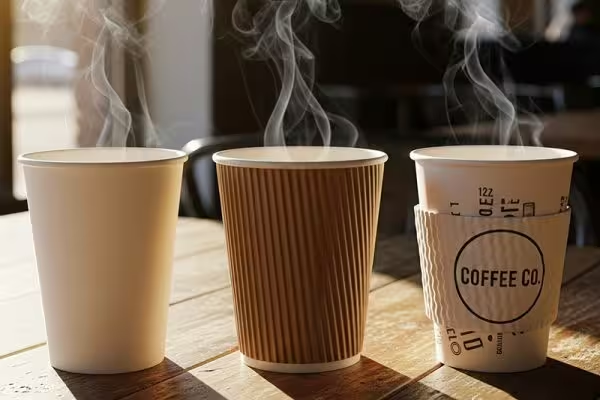
Table Of Contents
show
- The Ubiquity of the Paper Coffee Cup
- Why This Guide Matters
- History and Evolution
- Anatomy of a Coffee Paper Cup
- Types of Coffee Paper Cups
- Sustainability and Environmental Impact
- Health and Safety Considerations
- Branding and Marketing Potential
- Choosing the Right Cup for Your Business
- Future Trends in Coffee Cups
- Conclusion
The Ubiquity of the Paper Coffee Cup
Walk down any busy street in New York, London, or Tokyo, and you will spot an everyday accessory: the paper coffee cups. It is more than just a vessel for caffeine; it is a symbol of modern, fast-paced life. Globally, we go through an estimated 250 billion disposable cups each year, making them among the most ubiquitous packaging items on the planet. (Source: Closed Loop Partners)
Why This Guide Matters
For coffee shop owners, the paper cup is a critical business decision. It affects your bottom line, your customers’ experience, and your brand’s image. A cheap cup can burn hands and leak, ruining the best latte. A premium cup can elevate the perceived value of your product.
For consumers, understanding what holds your morning brew is equally essential. In an age of environmental awareness and health consciousness, knowing the difference between a polyethylene lining and a compostable one—and understanding the realities of recycling—empowers you to make better choices. This guide serves as the definitive resource on everything you need to know about coffee paper cups.
History and Evolution
The “Health Kup” Era
The paper cup wasn’t born out of convenience, but out of a public health crisis. In the early 20th century, sharing communal metal cups or “dippers” at public water fountains was standard practice. This changed when Lawrence Luellen invented the “Health Cup” in 1907 (later known as the Dixie Cup) to promote hygiene. (Source: Smithsonian Magazine) The devastation of the Spanish Flu in 1918 further solidified the paper cup’s place in society, as the public became terrified of germs and demanded single-use options.
The Rise of the Modern Coffee House
While the early paper cups were for cold water, the boom of the “to-go” coffee culture in the 1980s and 90s necessitated a technological leap. The humble paper cup had to evolve to handle scalding hot liquids without disintegrating or burning the holder. This era saw the introduction of the domed travel lid (the “sip lid”), transforming the coffee cup into a spill-proof mobile accessory that fueled the growth of giants like Starbucks and Dunkin’.
Anatomy of a Coffee Paper Cup
To the average drinker, a cup is just paper. To a manufacturer, it is a feat of engineering.
Raw Materials
- Paperboard: The structural backbone of the cup. It is measured in GSM (Grams per Square Meter). A higher GSM means a thicker, sturdier cup. Quality cups use virgin wood pulp for maximum stiffness and hygiene, though recycled fibers are increasingly used in the outer layers of double-wall cups.
- Sourcing: Premium cups often rely on wood fiber from sustainably managed forests, where trees are replanted faster than they are harvested.
The Lining (The Moisture Barrier)
Paper dissolves in water. To hold liquid, every paper cup needs a waterproof lining. This is the most controversial and misunderstood part of the cup.
- PE (Polyethylene): The industry standard since the mid-20th century. It is a petroleum-based plastic lining that is effective and cheap but makes recycling difficult.
- PLA (Polylactic Acid): A bioplastic made from renewable resources like corn starch or sugarcane. It mimics the function of PE but is industrially compostable.
- Aqueous Coating: The cutting-edge alternative. This water-based coating is painted onto the paper, eliminating the need for a separate plastic film. It is rapidly becoming the future standard, driven by regulatory changes and consumer demand for plastic-free solutions.
Manufacturing Process
The journey from tree to cup involves several high-speed steps:
- Pulping & Forming: Wood is turned into paperboard.
- Printing: The paper reel is printed with branding before cutting.
- Die-Cutting: The paper is cut into fan shapes (the sidewall) and circles (the bottom).
- Forming: Machines wrap the sidewall around a mold, heat-seal the seam, and attach the bottom disc, often curling the top rim for lid stability.
Learn more about custom coffee cup printing techniques from LOKYO, a Chinese factory.
Types of Coffee Paper Cups
Single Wall Paper Cups
Single Wall Coffee Paper Cups are made from a single layer of paper substrate with a thin plastic coating (typically polyethylene PE) applied to the inner wall and rim. They are the most common and basic disposable paper cups in the food service industry.
- Construction: One layer of paperboard.
- Best Use: High-volume settings, warm drinks, or when cost is the primary concern.
- Pros: Most affordable option; lightweight; less material used.
- Cons: Poor insulation. For boiling drinks (like tea or Americanos), customers usually need a cardboard sleeve (“clutch”) or “double-cupping” to avoid burning their hands.
Double Wall Paper Cups
Double Walled Coffee Paper Cups consist of two layers of cup walls. A gap between these layers creates a stationary air insulation layer. Like single-walled cups, their inner walls are coated with a plastic film (usually PE) to prevent leaks. This design represents a key detail for enhancing the customer experience in the coffee industry.
- Construction: Two layers of paper with a small air gap in between.
- Mechanism: The air gap acts as a thermos, trapping heat inside while keeping the outer layer cool.
- Pros: No sleeve required; excellent heat retention; feels robust and high-quality.
- Cons: Higher unit cost; heavier; increased shipping weight.
Ripple Wall and Embossed Cups
Corrugated Paper Cups are the most common wavy paper sleeves designed to be placed over single-wall hot beverage cups.
Embossed paper cups feature raised, three-dimensional patterns created through mechanical embossing on the cup body (whether single- or double-wall). Combining insulation with a premium texture, they are currently the mainstream choice in the high-end market.
- Construction: A variation of the double-wall cup where the outer layer is corrugated (rippled) or embossed with a pattern.
- Benefits: The ridges reduce the surface area that comes into contact with the hand, providing superior grip and insulation.
- Marketing: The unique texture makes these cups stand out visually and tactilely.
Standard Sizes and Capacities
- 4oz (Espresso): Tiny cups for single shots or sampling.
- 8oz (Small): The standard size for Flat Whites and traditional Cappuccinos.
- 12oz (Medium/Regular): The most popular size for Lattes and drip coffee.
- 16oz & 20oz (Large/X-Large): Reserved for volume-heavy drinks like iced coffees or extra-large teas.
More about the most popular paper cup sizes in coffee shops
Sustainability and Environmental Impact
The Recycling Challenge
The biggest myth in the industry is that you can toss a standard coffee cup in the paper recycling bin. You generally cannot.
- The Issue: The PE plastic lining is fused so tightly to the paper that standard recycling plants cannot separate them. The UK Parliament’s Environmental Audit Committee noted that less than 1 in 400 (0.25%) disposable coffee cups are currently recycled through standard systems. (Source: UK Parliament Report on Disposable Packaging)
- The Solution: Specialized facilities are required to recycle PE-lined cups, which are rare in many municipalities. The industry is currently shifting away from PE coatings entirely.
Biodegradable vs. Compostable vs. Recyclable
These terms are often used interchangeably, but they mean very different things:
- Recyclable: Can be processed into new material (e.g., Aqueous coated cups).
- Compostable: Will break down into organic matter rich in nutrients. Crucial Note: Most “compostable” cups (PLA) require industrial composting facilities with high heat (140°F+) to break down. They will not decompose in a backyard heap.
- Biodegradable: A vague term meaning it will eventually break down, but it could take decades and leave behind microplastics. Avoid products that only claim to be “biodegradable” without certification.
Certifications to Look For
- FSC (Forest Stewardship Council): Guarantees the paper comes from responsibly managed forests.
- BPI (Biodegradable Products Institute): The North American standard for verifying that a product is truly compostable in industrial facilities.
- OK Compost: The European equivalent standard (EN 13432).
Health and Safety Considerations
Heat Resistance and Structural Integrity
A failing cup is a liability. Quality cups are engineered to withstand temperatures up to 212°F (100°C) without the seams gluing apart or the sidewalls collapsing. Cheap imports often fail the “squeeze test” when filled with hot liquid.
Chemical Leaching Risks
There is growing scrutiny regarding what happens when boiling water meets plastic lining. Recent experimental studies have highlighted significant risks:
- Microplastic Release: A 2024 study found that when exposed to hot water (85°C), the plastic lining of paper cups degraded within minutes, releasing microplastics. Another study estimated that a single 100ml cup may release up to 0.7 million microplastics into the beverage. (Source: ResearchGate, LabMed Discovery)
- Chemical Contamination: These studies also identified the leaching of hazardous chemicals, such as phthalates, heavy metals, and endocrine disruptors (e.g., styrene), alongside microplastics, accelerating the push toward fully plastic-free linings, such as aqueous coating.
Branding and Marketing Potential
The “Walking Billboard” Effect
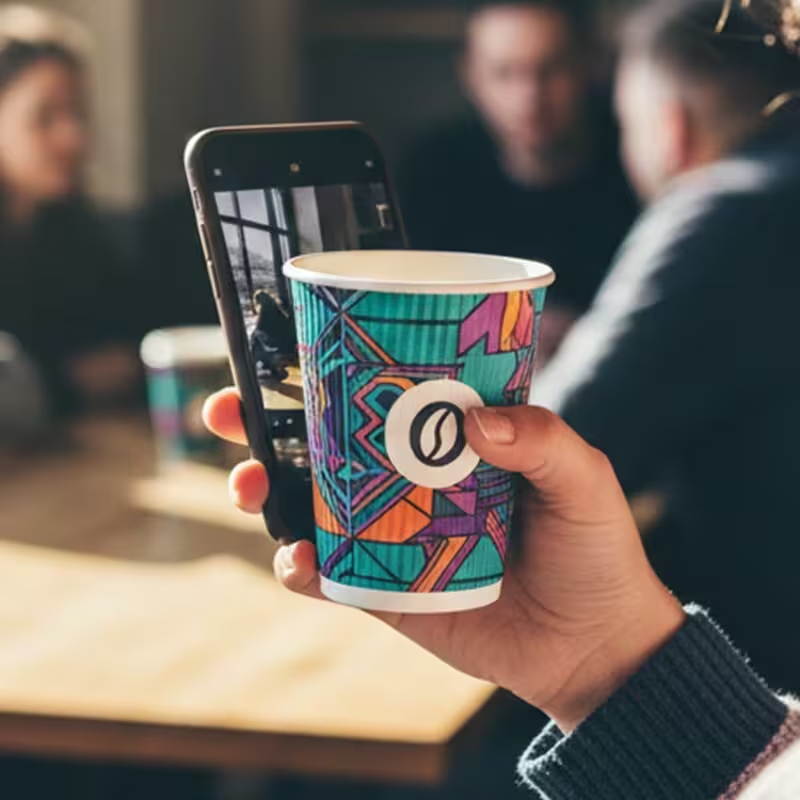
A coffee cup is a mobile advertisement. Every customer walking out of your shop carries your brand onto the street, into their office, and onto public transit. In the age of social media, a beautifully designed cup is “Instagrammable,” generating free user-generated content (UGC) for your business.
Custom Printing Technologies
- Flexographic: Uses flexible relief plates. It is fast and cost-effective for large orders (10,000+ cups) with simple logos and Pantone colors.
- Offset (Lithographic): Ideal for high-definition images and complex gradients. The setup costs are higher, but the quality is superior.
- Digital Printing: No plates required. Perfect for short runs (e.g., 500 cups) for events, weddings, or seasonal promotions.
Smart Packaging
Innovative brands are turning cups into digital portals. Printing QR codes on cups can drive customers to:
- Download your loyalty app.
- View the nutritional menu.
- Read about your bean sourcing and sustainability story.
Choosing the Right Cup for Your Business
Assessing Your Menu
If your leading seller is a piping-hot Americano or tea (water-based drinks hold heat longer than milk-based ones), you need a double-wall cup or a sleeve. If you serve mostly lukewarm kids hot chocolates or quick espressos, a single-wall may suffice.
Budget vs. Brand Image
A custom double-wall cup costs more than a generic white single-wall cup. However, ask yourself: Is the savings worth the cost of a customer thinking your brand feels “cheap”? Often, the cup is the only physical interaction a takeaway customer has with your brand.
Storage and Logistics
Space is money. Single-wall cups stack much tighter than double-wall or ripple cups. If your café is a “hole in the wall” with limited back-of-house storage, cup nesting efficiency is a legitimate logistical factor.
Future Trends in Coffee Cups
The Rise of Cup-Share Programs
To combat waste, cities are piloting “library” systems for cups. Customers pay a small deposit for a durable plastic cup, take it away, and return it to any participating café to get their deposit back. The cups are washed and recirculated.
Edible Coffee Cups
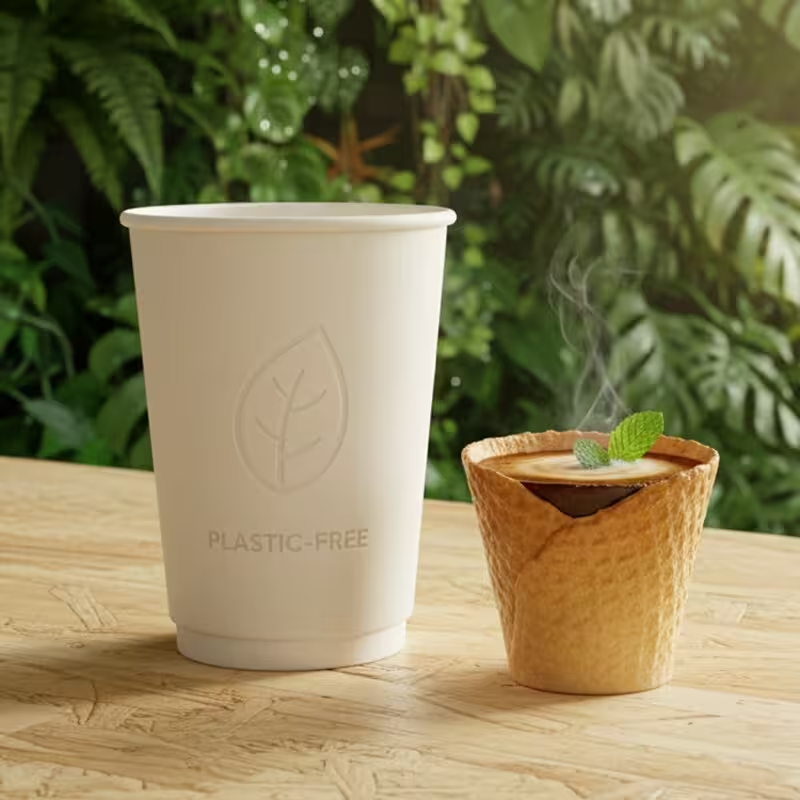
Startups are developing wafer-based or grain-based cups that you can eat after finishing your coffee. While currently a niche novelty, they represent the ultimate “zero waste” solution.
Plastic-Free Legislation
Governments worldwide (from the EU to Canada and parts of the US) are banning specific single-use plastics. This legislation is forcing the rapid adoption of aqueous coatings and paper lids, moving the industry toward a truly plastic-free future. As one packaging supplier noted, “Aqueous coating paper cups are no longer a ‘future option’, they’re becoming the present-day standard for compliance, consumer trust, and sustainability.” (Source: SoGreenPack)
Conclusion
Summary
The paper coffee cup is a complex product that sits at the intersection of convenience, engineering, and environmental ethics. From the sturdy double-wall construction to the critical choice of lining material, every detail matters.
Final Verdict: Balancing Convenience, Cost, and Conscience
There is no “perfect” cup, but there is a right cup for your specific needs.
- For the Eco-Warrior: Choose Aqueous-coated or certified compostable (if local facilities exist).
- For the Budget-Conscious: Single-wall with a generic sleeve.
- For the Brand Builder: Custom-printed double-wall cups that act as premium mobile billboards.
By understanding the anatomy and impact of these vessels, businesses and consumers alike can make choices that taste good—and feel good.